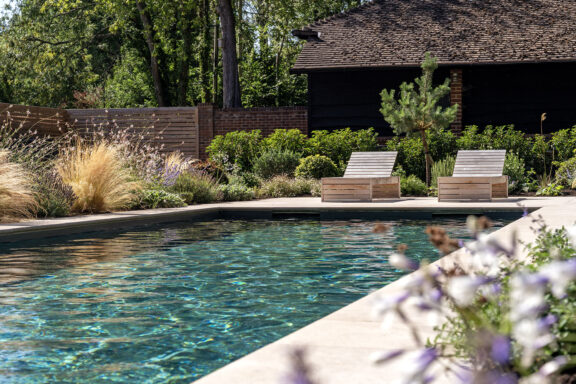

A swimming pool should feel like a natural extension of the property it belongs to rather than a tacked-on afterthought. Whether an indoor pool or part of your outdoor space, when thoughtfully designed, it can reinforce the character of a building, complementing its materials and architecture.
Natural swimming pools are not restricted to one particular aesthetic. Although they provide a chlorine-free swimming experience using natural filtration, their appearance can be completely bespoke. A natural pool can be minimalist and contemporary, rustic and informal, or carefully designed to complement a historic property.
In this guide, we’ll take you through some of our favourite architectural styles and how a natural pool can be incorporated.
Modern Architecture and Minimalist Natural Pools
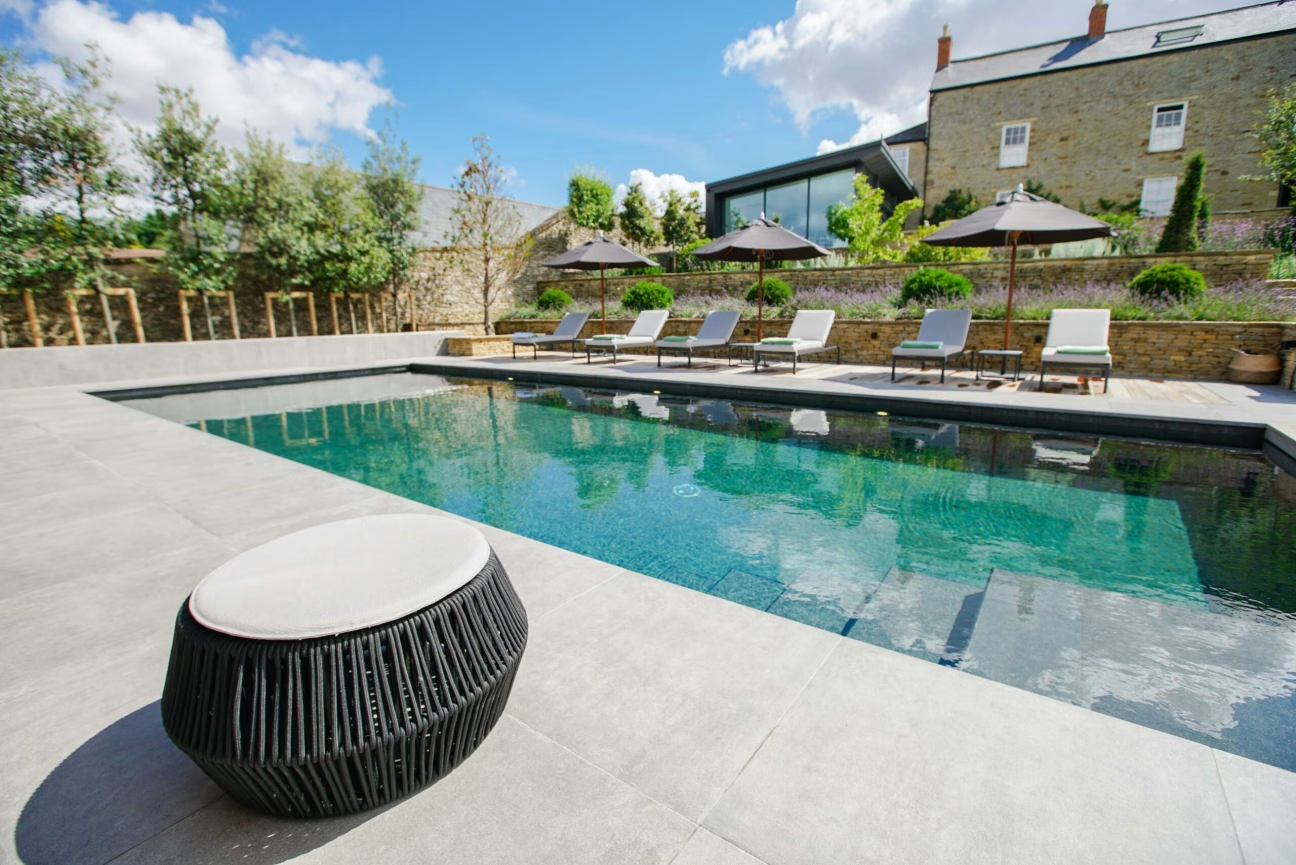
Modern architecture often relies on clean lines, simple forms and a restrained material palette. Natural swimming pools can work exceptionally well within this aesthetic, particularly when the pool design reflects the geometry and proportions of the building.
A simple rectangular pool can create a strong architectural feature, with the uninterrupted surface of the water providing a sense of calm against sharper architectural features. Minimalist landscaping can reinforce the effect.
For contemporary homes with large areas of glazing, the relationship between the pool and the building can be particularly important. Positioning the water to reflect the architecture or extend key sightlines can make the pool feel like another element of the building rather than a separate garden feature.
Country Houses and Rustic Pools
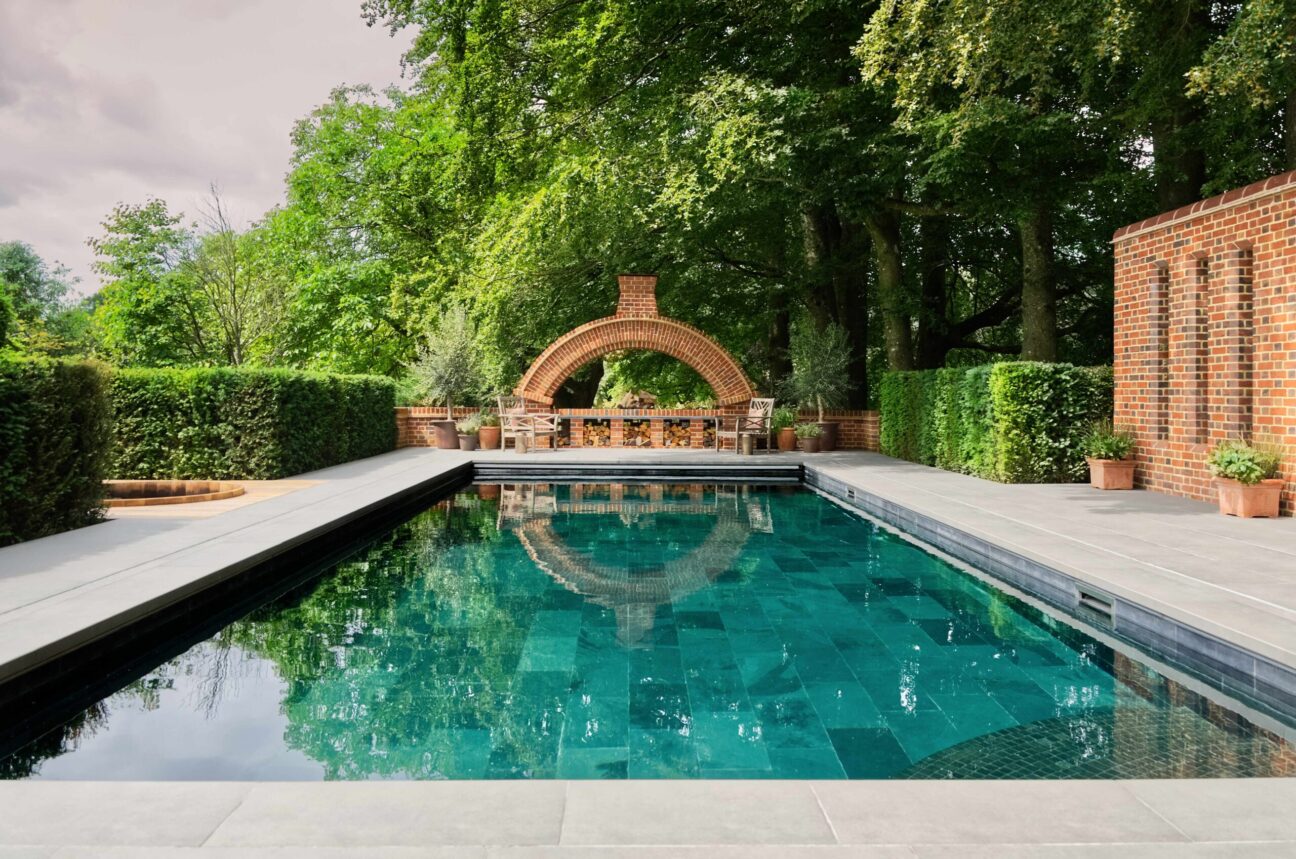
Country houses and rural properties require a very different approach. A highly geometric contemporary pool can sometimes feel disconnected from a flowering garden or historic landscape, whereas a more naturalistic design can sit comfortably within its surroundings.
A pool might incorporate natural stone and softer edges to create the impression of an established water feature. The swimming area can still be designed for comfortable everyday use, while the surrounding landscape provides a more informal and natural character.
For larger estates, the pool can be positioned away from the main house and integrated into the wider grounds, creating a secluded destination rather than a highly visible architectural feature.
Listed Buildings and Historical Architecture
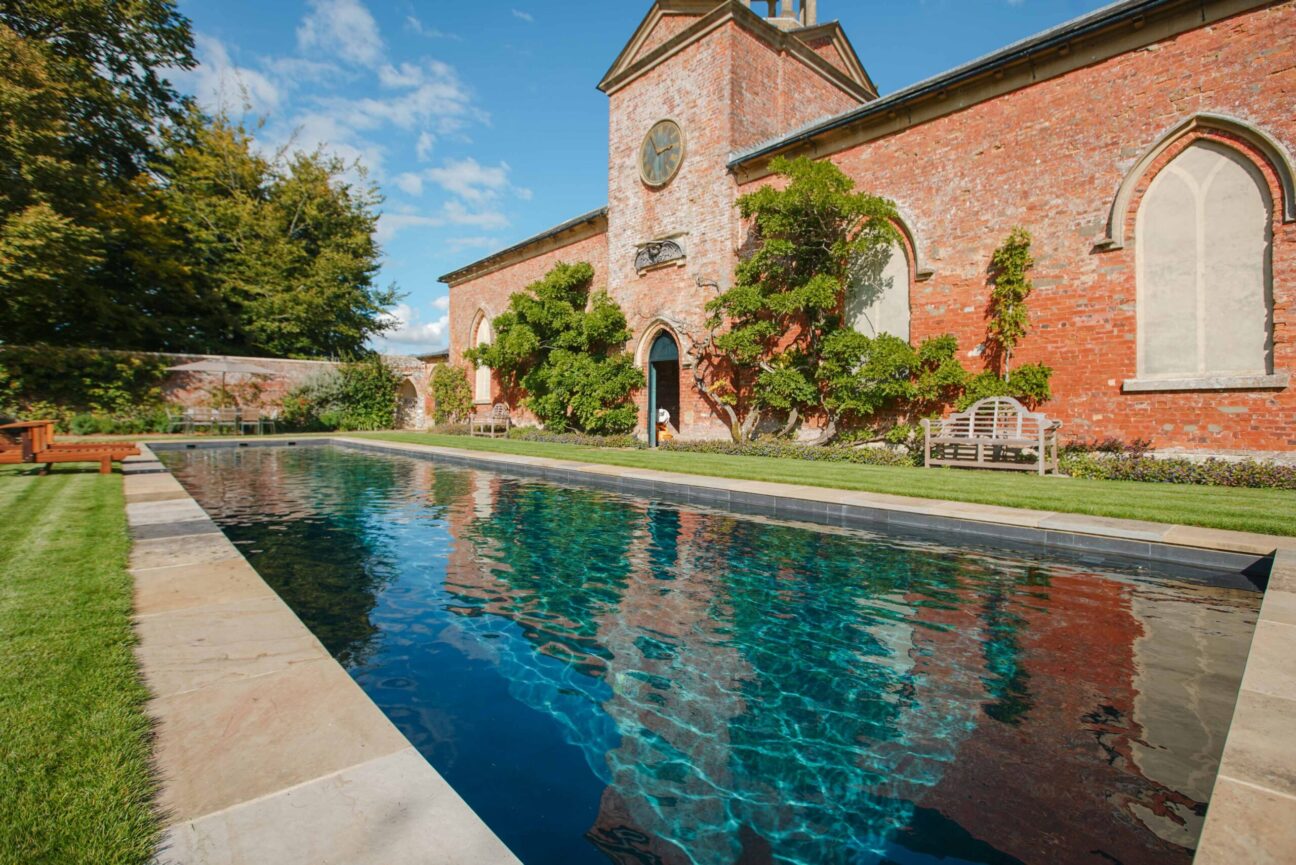
Designing a swimming pool alongside a listed or historic building requires careful consideration. The challenge is to introduce a modern amenity without undermining the architectural or historical significance of the property.
This does not necessarily mean that a pool needs to look old-fashioned. Instead, its proportions, materials, positioning and relationship with the surrounding landscape should be considered carefully.
For a historic property, a natural pool can be designed to draw inspiration from existing architectural materials and landscape features. Local stone and clever landscaping can help establish a visual connection between the pool and its surroundings.
The positioning of the pool can also be important. Where appropriate, placing it away from the main property may allow the swimming environment to remain discreet while preserving important views and architectural features.
For projects involving listed buildings or sensitive historic landscapes, early collaboration with the wider architectural and planning team is particularly important. A bespoke approach allows the pool to be considered as part of the property’s overall design rather than as an isolated addition.
Georgian and Classical Architecture
Georgian and classical properties often feature symmetry, proportion and formal landscaping. These characteristics can provide an excellent foundation for a more structured natural swimming pool design.
A rectangular pool can reinforce the symmetry of a Georgian property or formal garden. The natural filtration element can remain discreet, allowing the visible pool to retain a refined and architectural appearance.
There is also scope to take a less formal approach. Where a Georgian or classical property sits within extensive natural grounds, a more informal pool could be positioned further into the landscape, creating a contrast between the formal architecture and natural surroundings.
Pools for Barn Conversions and Rural Architecture
Barn conversions are another architectural style where natural swimming pools can have a particularly strong impact. For a converted barn with exposed stone, timber or brickwork, a contemporary pool can provide a deliberate contrast, creating a modern feature within a historic rural setting.
Alternatively, a more naturalistic pools, as with country homes, can reinforce the property’s relationship with the surrounding countryside. The choice will depend on whether the wider architectural scheme aims to celebrate contrast or create a more seamless transition between building and landscape.
The surrounding landscape is particularly important for rural properties. Views across fields, woodland and countryside can become an integral part of the swimming experience, while planting can be used to create privacy without losing the connection with the wider setting.
Designing Pools Around Your Home
Whatever the architectural style, one of the most important considerations is the relationship between the building, pool and landscape. While a pool that has been designed independently can sometimes appear disconnected from its surroundings, our dedicated team are experienced at designing pools that fit cohesively into your property’s style.
At Clear Water Revival, every pool is bespoke. For more information, or to get started, talk to our team today.