A swimming pool is a significant investment, so it makes sense to protect it when it is not being used. While a pool cover might initially seem like an optional extra, it can have a major impact on the safety, running costs, energy efficiency and maintenance requirements of a swimming pool.
For both indoor and outdoor pools, a well-designed cover helps reduce evaporation, retain heat, prevent debris from entering the water and, depending on the system chosen, provide an important layer of security.
For natural swimming pools, covers are just as relevant.
Why Does a Swimming Pool Need a Cover?
One of the biggest reasons to invest in a swimming pool cover is heat loss. Evaporation is one of the primary ways a swimming pool loses heat, particularly when the water is warmer than the surrounding air.
When warm pool water is exposed to the atmosphere, water molecules evaporate from the surface, taking heat energy with them. Covering the pool creates a barrier between the water and the surrounding air, significantly reducing evaporation when the pool is not in use.
This means less energy is required to maintain the desired water temperature and less water is lost through evaporation. Over the lifetime of a swimming pool, these savings can make a pool cover an important part of an energy-efficient design.
Heating a swimming pool can account for a significant proportion of its running costs, particularly in the UK where outdoor temperatures can vary considerably throughout the year.
It makes little sense to invest in an efficient heating system only to allow much of that heat to escape whenever the pool is not being used. A cover helps retain warmth within the water, reducing the amount of energy required to bring the pool back to its desired temperature.
A Pool Cover Can Save Water
Evaporation does not only result in heat loss. It also means that water gradually leaves the pool. An uncovered pool will naturally lose water to the atmosphere, particularly during periods of warm weather or when there is increased airflow across the water surface. This water then needs to be replaced.
A pool cover significantly reduces evaporation when the pool is not being used, meaning less water needs to be added over time. For anyone interested in reducing the environmental impact of their swimming pool, this is an important consideration.
This is particularly relevant to natural swimming pools, which are designed around a more environmentally conscious approach to swimming. Our natural swimming pools already avoid conventional chemical treatment, and reducing unnecessary water consumption provides another opportunity to make pool operation more sustainable.
Pool Covers Help Keep Swimming Pools Clean
A pool cover also provides a simple physical barrier between the water and the surrounding environment. Outdoor swimming pools are naturally exposed to leaves, dust, pollen, insects and other atmospheric debris. Much of this material can be prevented from entering the pool when a cover is used.
Keeping debris out of the water reduces the amount of cleaning required and can also reduce the workload placed on filtration equipment. Instead of spending as much time removing leaves and other debris from the pool itself, much of it can simply be cleared from the cover.
This can be particularly useful for pools surrounded by mature planting or trees, where falling leaves can become a significant maintenance consideration during autumn and winter.
Pool Covers and Swimming Pool Safety
For families with young children or pets, safety is one of the most important considerations when choosing a swimming pool cover. Certain covers are specifically designed as safety or security covers and are manufactured to provide a load-bearing barrier across the pool when it is not in use. These systems can help reduce the risk of accidental falls into the water.
However, it is important to understand that not every pool cover is a safety cover. Solar or bubble covers, for example, are designed primarily to reduce evaporation and retain heat and should not be treated as a safety barrier.
If safety is a priority, the cover needs to be selected specifically for that purpose and installed according to the manufacturer’s requirements. The surrounding pool design, access controls and wider safety measures should also be considered as part of the overall project.
Why Indoor Pools Need Covers Too
It is easy to assume that an indoor swimming pool does not need a cover because it is already protected from the weather. In reality, pool covers can be particularly important within indoor pool environments.
The large surface area of warm water creates evaporation, which increases humidity within the pool hall. This moisture then needs to be managed by the building’s ventilation and air-handling system. A pool cover reduces the amount of water evaporating into the surrounding air, helping to control humidity and reducing the workload placed on the air-handling system.
This can have an important impact on both energy consumption and the comfort of the indoor pool environment. For anyone designing an indoor pool, the cover should therefore be considered from the earliest stages alongside ventilation, heating and insulation.
What Types of Swimming Pool Covers Are Available?
There are several different types of pool cover, each with different advantages depending on the pool, property and priorities of the homeowner.
Solar or Bubble Pool Covers
Solar covers, sometimes known as bubble covers, are lightweight floating covers made from polyethylene film. Their primary purpose is to reduce evaporation and help retain heat within the pool. They are generally a simpler and more cost-effective option, although they tend to require manual handling and storage when the pool is being used. Their lifespan can also be affected by prolonged exposure to sunlight and the elements.
Automatic Slatted Pool Covers
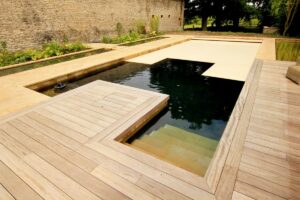
Slatted covers are made from interlocking PVC or polycarbonate slats that float on the surface of the water. They can be operated automatically and retract into a concealed cover pit or enclosure when the pool is in use. This makes them particularly attractive for luxury swimming pools where aesthetics, ease of operation and thermal efficiency are all important. A concealed slatted cover can disappear beneath decking, paving or another carefully designed area around the pool, maintaining the clean appearance of the surrounding landscape.
Safety and Security Pool Covers
Automated security covers use reinforced fabric attached to a leading edge that moves across the pool using a mechanical system. When closed, the cover provides a secure barrier over the swimming area while also helping to prevent leaves and debris from entering the water. For families, this can make them an attractive option where safety is a major consideration. Security covers can also be particularly useful for outdoor pools because they combine protection, cleanliness and reduced heat loss within one system.
There is no single pool cover that is right for every project. The best choice will depend on whether the pool is indoors or outdoors, how frequently it will be used, the importance of safety, the surrounding landscape and the desired appearance.
How to Look After Your Swimming Pool Cover
A pool cover needs regular care if it is to continue performing effectively. Outdoor covers should be kept clear of leaves and other debris, which can be removed using an appropriate leaf rake or blower before the cover is cleaned with water.
The cover should also be checked periodically for signs of deterioration, damage or wear. Fabric covers can become brittle over time through exposure to UV radiation and general use, while mechanical systems should be inspected to ensure that they continue to operate correctly.
Including the cover within an annual pool maintenance inspection can help identify small problems before they develop into more expensive repairs.
Talk To Our Team About Pool Covers
A swimming pool cover may not be the most glamorous part of a pool design, but it can have a significant impact on how efficiently and safely the pool operates. At Clear Water Revival, we consider the practical performance of the pool alongside its appearance, helping clients create swimming environments that are efficient, beautiful and designed to last.